

Built To Complete by James Anderson | Book Feature
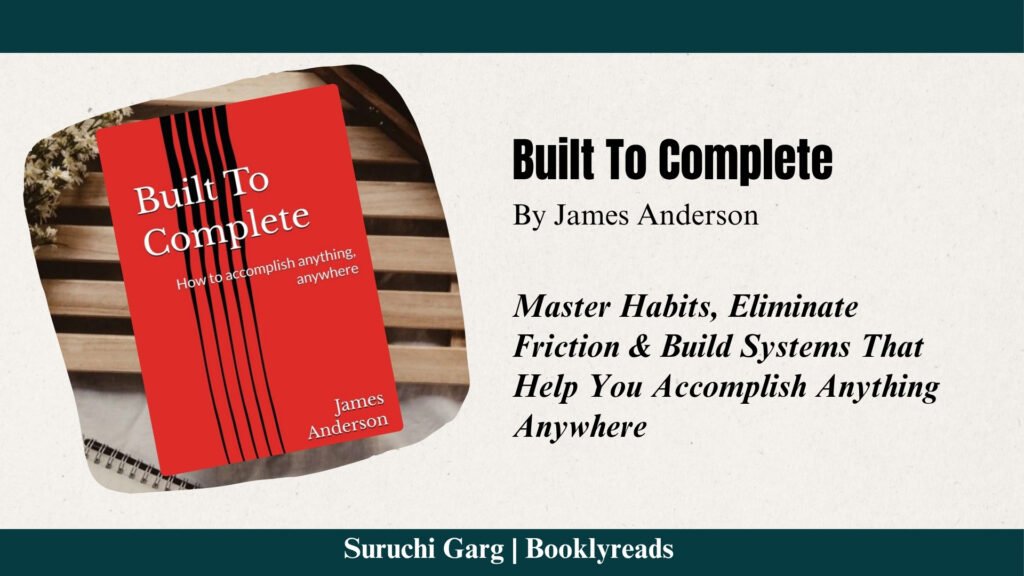
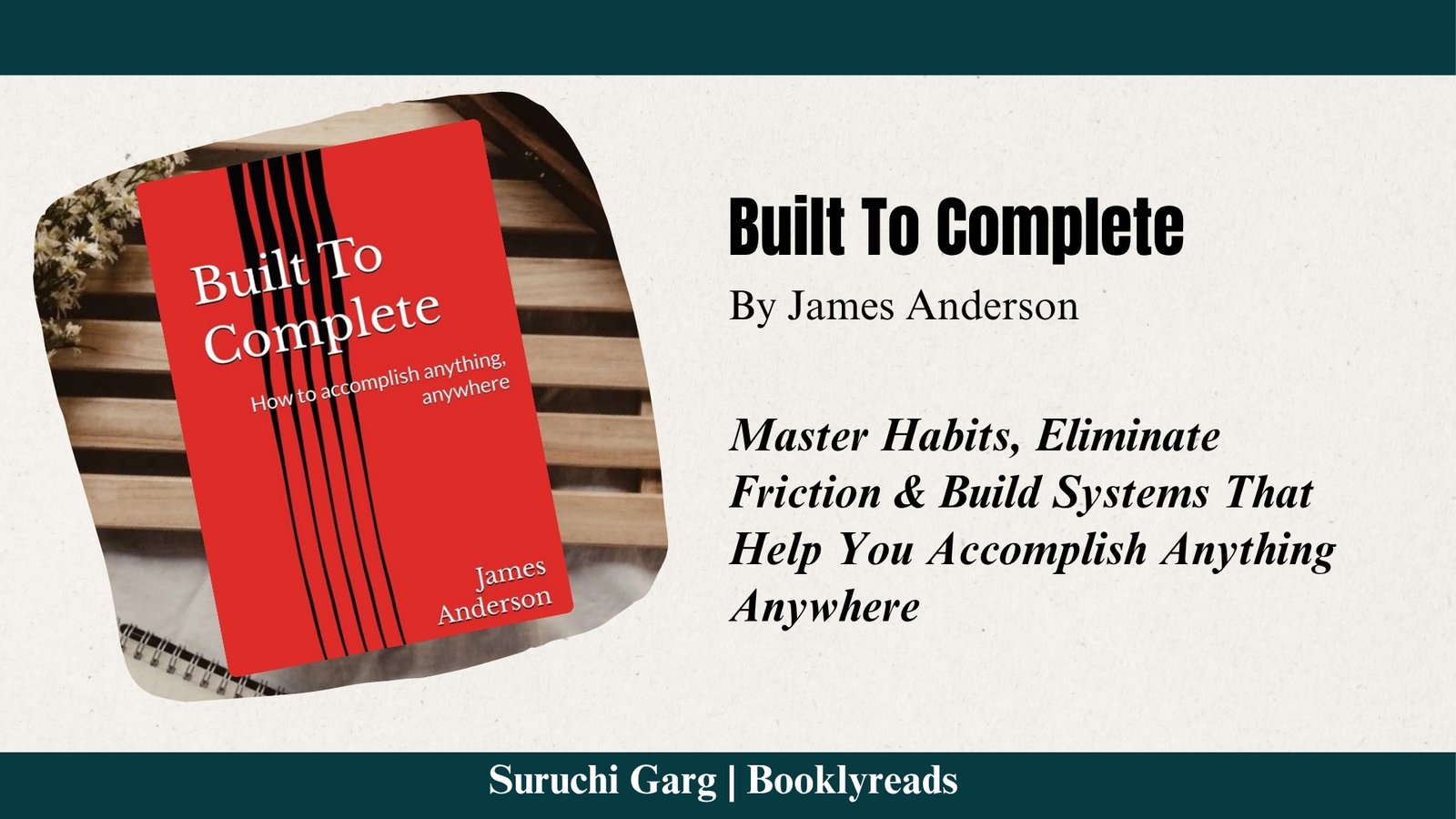
Built To Complete by James Anderson: Master Habits, Eliminate Friction & Build Systems That Help You Accomplish Anything Anywhere
We all know what it feels like to start something with excitement only to abandon it a few days later. Whether it’s reading more books, exercising consistently, learning a new skill, or building a business, the hardest part isn’t starting—it’s staying consistent until the goal is achieved.
Built To Complete by James Anderson is a practical guide that explores exactly why people struggle to follow through and, more importantly, how to build systems that make consistency almost inevitable. Rather than relying on motivation or willpower, the book focuses on creating habits, designing the right environment, removing unnecessary obstacles, and developing a mindset that makes long-term success sustainable.
Filled with stories from psychology, sports, business, history, and neuroscience, this book presents a collection of practical principles that anyone can apply to accomplish meaningful goals.
Buy your copy of Built To Complete by James Anderson here
What Is Built To Complete By James Anderson About?
Built to Complete by James Anderson is a practical self-improvement book about turning goals into consistent action. Rather than relying on motivation or willpower, the book explains how to build systems, habits, and routines that make progress almost automatic.
Throughout the book, James Anderson introduces practical ideas such as identity-based habits, reducing friction, tracking progress, habit stacking, using your environment to your advantage, balancing work with recovery, and applying the 9/10 Rule to stay consistent even after setbacks. Each lesson is supported by real-world stories, psychological research, and actionable strategies that readers can implement immediately.
At its core, Built to Complete by James Anderson argues that success isn’t achieved through occasional bursts of motivation but through small actions repeated consistently over time. It’s a guide for anyone who wants to stop procrastinating, build lasting habits, and accomplish meaningful goals with a sustainable, long-term approach.
Key Lessons From Built To Complete By James Anderson
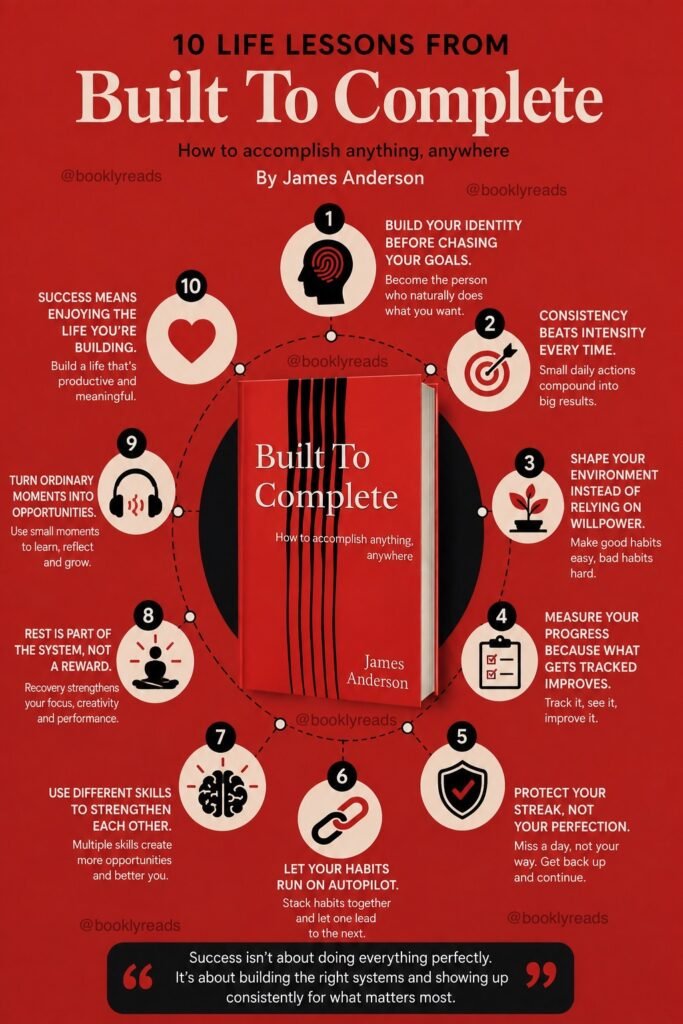
1. Build your identity before chasing your goals.
Long-term change begins with identity, not outcomes. Instead of saying, “I want to read more,” become the kind of person who reads every day. Every small action is evidence of who you are becoming. When your habits match your identity, consistency feels natural instead of forced. Don’t focus only on what you want to achieve—focus on who you need to become.
2. Consistency beats intensity every time.
Success rarely comes from occasional bursts of effort. It comes from showing up repeatedly, even when the action seems small. A habit performed daily compounds into extraordinary results over time. It’s better to do a little every day than to do a lot once in a while. Progress belongs to those who stay consistent long after motivation disappears.
3. Shape your environment instead of relying on willpower.
Willpower is limited, but your environment influences every decision you make. Remove distractions, make good habits convenient, and make bad habits difficult. Place books where you’ll read them, prepare healthy meals in advance, and reduce access to temptations. The easier you make the right choice, the less discipline you’ll need to stay on track.
4. Measure your progress because what gets tracked improves.
Whether it’s pages read, workouts completed, steps walked, or hours practiced, tracking keeps your goals visible. It creates accountability and reminds you that even small actions are moving you forward. Progress often feels invisible until you measure it. A simple habit tracker can become one of the strongest motivators for staying consistent.
5. Protect your streak, not your perfection.
Missing one day doesn’t ruin your progress. Giving up after missing one day does. Consistency isn’t about never failing—it’s about returning quickly after setbacks. The book’s “9 out of 10” philosophy reminds us that success is built on persistence, not flawless execution. One imperfect day should never become an excuse to abandon the habit completely.
6. Let your habits run on autopilot.
The best routines require the least mental effort. Connect positive habits together until one naturally leads to the next. Drink water after waking up, exercise afterward, shower, then read a few pages. By stacking habits into a sequence, you eliminate constant decision-making and make productive behavior almost automatic.
7. Use different skills to strengthen each other.
Learning isn’t limited to one field. Skills gained in one area often improve another. Reading sharpens communication, music develops focus, sports build discipline, and languages expand thinking. Instead of seeing multiple interests as distractions, use them to multiply your overall growth. Diverse experiences create more creative, adaptable, and capable individuals.
8. Rest is part of the system, not a reward.
Working nonstop isn’t a sign of productivity. Recovery allows your body to recharge and your mind to process information, solve problems, and generate new ideas. Breaks, walks, exercise, and quiet reflection often lead to better decisions than pushing through exhaustion. Sustainable success requires both focused effort and intentional recovery.
9. Turn ordinary moments into opportunities.
Not every task demands your full attention. Walking, commuting, cleaning, or cooking can become opportunities to learn through audiobooks, podcasts, or reflection. By pairing automatic activities with meaningful ones, you reclaim hours that would otherwise disappear. Small moments used wisely compound into an enormous advantage over time.
10. Success means enjoying the life you’re building.
Achievement without enjoyment is incomplete. Build habits that help you grow, but don’t sacrifice relationships, curiosity, adventure, or meaningful experiences along the way. The moments you’ll remember most aren’t just the goals you achieved—they’re the people you shared them with and the life you lived while pursuing them. Productivity should create freedom, not take it away.
What Makes Built To Complete By James Anderson Different?
Unlike many productivity books that focus only on motivation or time management, Built to Complete by James Anderson takes a practical, systems-based approach to accomplishing goals. Instead of telling you to work harder, it shows you how to make success easier by building habits, reducing friction, tracking progress, and designing an environment that supports consistent action.
What also sets this book apart is its unique collection of simple yet powerful frameworks, such as the Consistent Chain of Actions (CCA), the 9/10 Rule, habit stacking, friction management, and identity-based growth. Each concept is backed by memorable stories, psychological research, and real-life examples that make the lessons easy to understand and apply.
The book doesn’t promise shortcuts or overnight transformation. Instead, it emphasizes that extraordinary results come from small actions repeated consistently over time. Its biggest strength is turning complex ideas about productivity, discipline, and personal growth into practical principles that almost anyone can start using immediately.
Who Should Read Built To Complete?
Built to Complete is ideal for:
Students who want to build consistent study habits, avoid procrastination, and improve focus.
Professionals and entrepreneurs looking to become more productive without relying on constant motivation.
Anyone struggling with consistency, whether it’s exercising, reading, learning a skill, or sticking to personal goals.
People trying to break bad habits and replace them with healthier, long-lasting routines.
Creators, freelancers, and remote workers who need better systems to stay disciplined while working independently.
Self-improvement enthusiasts who enjoy books like Atomic Habits, The Compound Effect, and Deep Work and want practical strategies they can apply immediately.
If you’ve ever started something with enthusiasm but struggled to stay consistent, this book offers a practical framework for turning good intentions into lasting habits and meaningful results.
Final Thoughts:
Built to Complete by James Anderson is a practical reminder that success is rarely the result of talent or motivation alone. It’s built through consistent habits, well-designed systems, and small actions repeated day after day. Rather than offering quick fixes, the book encourages readers to focus on sustainable progress, making it easier to stay disciplined over the long term.
Whether you’re trying to improve your health, build a business, learn a new skill, or simply become more consistent, the lessons in this book are practical, easy to apply, and backed by real-world examples. If you’re looking for a self-improvement book that emphasizes action over inspiration, Built to Complete by James Anderson is a worthwhile read that can help you build habits that last and accomplish your goals one step at a time.
Frequently Asked Questions (FAQ)
What is Built to Complete by James Anderson about?
Built to Complete is a practical personal development book that teaches how to finish what you start. It combines mindset, discipline, habits, planning, action, health, time management, and consistency into one complete system for achieving goals in any area of life.
Who should read Built to Complete?
Students, professionals, entrepreneurs, creators, and anyone interested in productivity, self-improvement, and those who want to accomplish anything.
What is the main message of the book?
The core message is simple: consistent action matters more than motivation or perfection. Progress comes from showing up repeatedly, reducing friction, building habits, and continuing even when conditions are not ideal.
Is Built to Complete a productivity book or a mindset book?
It is both. The book addresses mindset through virtues such as accountability, discipline, resilience, and patience, while also offering practical productivity tools like planning, tracking, habit building, prioritization, and time management.
What is the 20-10-5 rule explained in the book?
The rule suggests:
- 20 minutes every morning for exercise,
- 10 minutes every night for learning or working on a skill or project,
- 5 minutes immediately for any task that takes less than five minutes.
The purpose is to defeat procrastination through small, consistent actions.
You might also like
- All Posts
- Book Recommendations
- Non-Fiction Books
- Author Interviews
Recent Posts

Suruchi Garg
Suruchi is a reader and book influencer passionate about helping readers find books that truly impact their lives. She was listed as Top book influencer among top 60 Indian book influencers in 2025. With the experience of over 4 years and was trusted by more than 300 authors she aims to make reading a transformative experience.
Latest Blog
Featured


Sign Up for The Newsletter for Updates on Writing, Tour, and More

Book influencer and self help enthusiast.
Book influencer and self help enthusiast.
Contact Info
readsbookly@gmail.com
@booklyreads
Navigation
- Home
- About
- Book
- Contact