

In Search of a Humanity Code by Shasheen Jayaweera | Book Feature
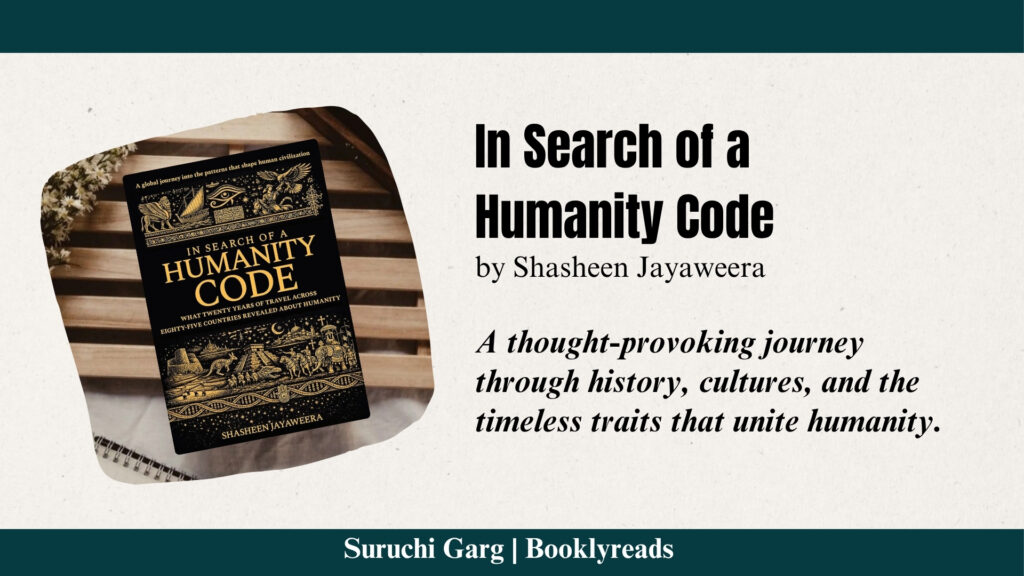
In Search of a Humanity Code by Shasheen Jayaweera- Exploring the Universal Traits That Connect Us All
Some books teach history. Others explore philosophy. A few inspire personal growth. In Search of a Humanity Code does something far more unique, it brings all of these together into one remarkable journey across civilizations.
Rather than focusing on dates, wars, or famous rulers, the book asks a much deeper question:
What makes us human?
Traveling across continents and centuries, Shasheen Jayaweera explores ancient cities, religious monuments, forgotten civilizations, and cultural traditions to uncover the universal traits that connect people despite differences in language, religion, geography, and history.
From the pyramids of Egypt and the temples of Bagan to the streets of Cuba and the domes of Hagia Sophia, every destination becomes part of a larger conversation about humanity itself.
If you enjoy books that challenge your perspective while making history meaningful, this is a fascinating read.
Buy your copy of In Search of a Humanity Code by Shasheen Jayaweera here
What Is In Search of a Humanity Code About?
At its heart, In Search of a Humanity Code explores one simple yet profound idea:
Despite our differences, every civilization is shaped by the same human experiences.
Throughout the book, the author travels across the world searching for ten universal themes that appear repeatedly throughout history.
These themes include:
- Amalgam
- Grit
- Power
- Connectivity
- Impermanence
- Tradition
- Work
- Home
- Darkness
- Divinity
Rather than presenting these as abstract concepts, each chapter connects them with real places, historical events, architecture, cultures, and personal experiences.
The result is a thought-provoking blend of travel writing, world history, philosophy, psychology, and cultural exploration that encourages readers to look beyond borders and discover the shared emotional blueprint of humanity.
Why In Search of a Humanity Code Matters Today
We live in a world where differences often receive more attention than similarities.
Political divisions, cultural conflicts, religious debates, and social media algorithms frequently encourage people to focus on what separates us.
This book offers a refreshing alternative.
Instead of asking who is right or wrong, it asks why humans across every civilization continue to seek meaning, belonging, identity, hope, and purpose.
By understanding these shared patterns, readers begin seeing countries not merely as locations on a map but as stories shaped by resilience, struggle, creativity, and collective memory.
In many ways, In Search of a Humanity Code reminds us that history isn’t simply about nations, it is about people.
Key Lessons From In Search of a Humanity Code
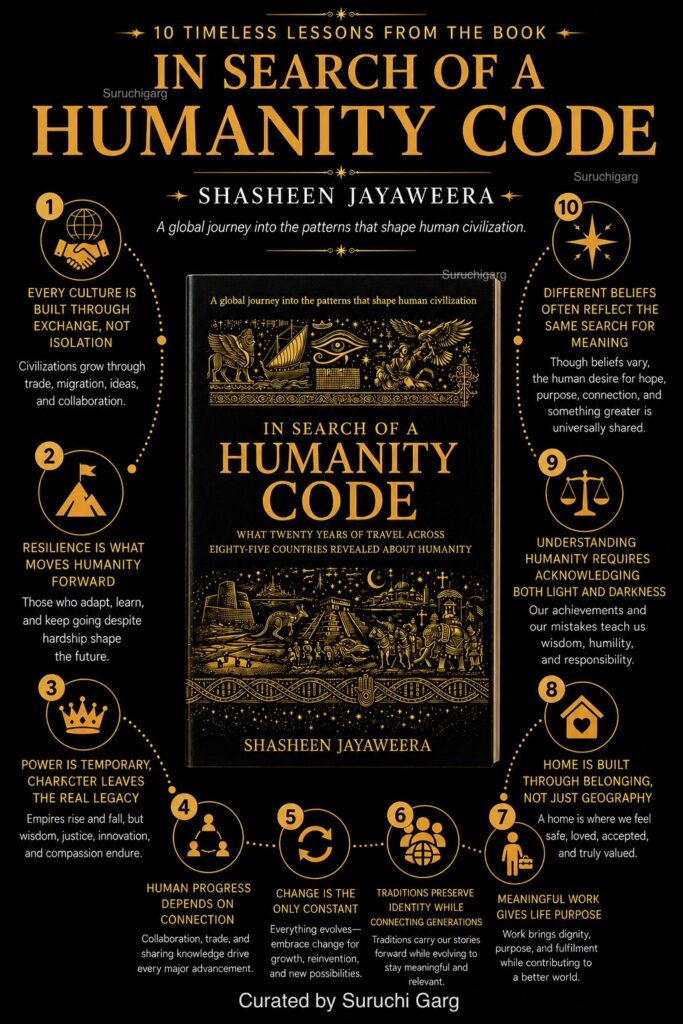
1. Every Culture Is Built Through Exchange, Not Isolation
No civilization develops in complete isolation. Languages, traditions, food, architecture, science, and ideas constantly travel across borders through trade, migration, conquest, and collaboration. The strongest societies are often those that embrace outside influences while preserving their unique identity. Instead of viewing cultural diversity as a threat, history shows it is one of humanity’s greatest strengths. Progress has always been the result of people learning from one another.
2. Resilience Is What Moves Humanity Forward
History isn’t shaped by people who never faced hardship, it is shaped by those who kept going despite it. Wars, disasters, poverty, and personal struggles have repeatedly tested civilizations, yet humanity has continued to rebuild. True resilience is not avoiding pain but adapting, learning, and growing stronger because of it. Every setback has the potential to become the foundation for future progress.
3. Power Is Temporary, Character Leaves the Real Legacy
Empires, governments, businesses, and influential leaders eventually rise and fall. History repeatedly reminds us that power is never permanent. What truly survives is the impact people leave through wisdom, justice, innovation, and compassion. Chasing authority without purpose often leads to decline, while serving others creates a legacy that outlives titles and positions.
4. Human Progress Depends on Connection
Almost every major advancement in history has come through collaboration. Trade routes spread ideas, cultures exchanged knowledge, and communities solved problems together. Innovation rarely happens in isolation. Building meaningful relationships, sharing knowledge, and remaining open to different perspectives are essential for personal growth as well as the advancement of society.
5. Change Is the Only Constant
Nothing remains the same forever. Cities transform, civilizations disappear, careers evolve, and even personal beliefs change with time. Accepting impermanence allows us to adapt instead of resisting reality. Rather than fearing change, we can learn to embrace it as an opportunity for growth, reinvention, and new possibilities.
6. Traditions Preserve Identity While Connecting Generations
Traditions are more than rituals or celebrations, they are living stories passed from one generation to the next. They preserve values, culture, and collective memory while creating a sense of belonging. At the same time, healthy traditions evolve with society instead of remaining fixed. Respecting the past while remaining open to progress helps cultures stay both meaningful and relevant.
7. Meaningful Work Gives Life Purpose
Work has always been more than earning a living. Across every civilization, people have worked to build families, create communities, solve problems, and contribute something valuable to society. Regardless of profession, meaningful work provides dignity, purpose, and fulfillment. Success becomes more rewarding when our efforts improve not only our own lives but also the lives of others.
8. Home Is Built Through Belonging, Not Just Geography
A home is more than a physical place. It is where people experience safety, love, identity, and acceptance. Throughout history, countless individuals have crossed borders searching for a better life because the desire for belonging is universal. Creating environments where people feel valued often matters far more than the buildings they live in.
9. Understanding Humanity Requires Acknowledging Both Light and Darkness
Human history contains extraordinary achievements alongside terrible mistakes. Compassion exists beside conflict, and innovation often develops alongside destruction. Ignoring either side gives an incomplete picture of humanity. Studying both our successes and failures helps us make wiser decisions, avoid repeating past mistakes, and appreciate the responsibility that comes with progress.
10. Different Beliefs Often Reflect the Same Search for Meaning
Religions and spiritual traditions may differ in practices and beliefs, yet many seek answers to the same timeless questions: Why are we here? How should we live? What gives life meaning? Recognizing this shared human search encourages empathy instead of division. While beliefs may vary, the desire for hope, purpose, connection, and something greater than ourselves is one of humanity’s most universal traits.
Buy your copy of In Search of a Humanity Code by Shasheen Jayaweera here
What Makes In Search of a Humanity Code Stands Out?
Unlike traditional history books, this book doesn’t overwhelm readers with dates and timelines.
Instead, every historical event serves a larger purpose helping readers understand human behavior.
Its blend of travel experiences, philosophy, architecture, anthropology, history, psychology, and storytelling creates an engaging reading experience that feels both educational and deeply personal.
Rather than simply explaining civilizations, the book explains why civilizations behave the way they do.
That perspective makes it memorable long after the final chapter.
Who Should Read In Search of a Humanity Code ?
This book is ideal for readers who:
- Love history and world civilizations and want to understand how societies have evolved through shared human experiences.
- Enjoy meaningful travel writing, where every destination offers lessons about culture, identity, and human nature.
- Are interested in psychology, sociology, or anthropology and the behaviours that shape humanity.
- Want a broader perspective on the world, discovering what connects people beyond borders, religions, and cultures.
- Are students, educators, researchers, or lifelong learners seeking fresh insights into global history and civilizations.
- Enjoy books that encourage reflection, exploring themes like identity, resilience, power, belonging, and purpose.
- Like authors such as Yuval Noah Harari, Alain de Botton, or Rutger Bregman, who combine history, philosophy, and human behaviour into engaging narratives.
Whether you’re passionate about history, fascinated by different cultures, or simply curious about what truly unites humanity, In Search of a Humanity Code offers a thought-provoking journey that will broaden your perspective long after you’ve finished reading.
Final Thoughts:
In Search of a Humanity Code is much more than a travel or history book, it’s a thoughtful exploration of what connects humanity across cultures, civilizations, and generations. By blending historical events, personal travel experiences, and philosophical reflections, Shasheen Jayaweera encourages readers to look beyond borders and recognize the universal traits that shape us all.
Rather than focusing on what makes people different, the book highlights the shared experiences of resilience, belonging, tradition, work, change, faith, and human connection. It reminds us that while languages, customs, and beliefs may vary, our hopes, struggles, and search for meaning are remarkably similar.
If you’re looking for a book that expands your worldview, challenges assumptions, and offers valuable lessons from history without feeling like a textbook, In Search of a Humanity Code is a worthwhile read. It’s the kind of book that leaves you with a deeper appreciation for both the diversity of our world and the common threads that unite us, long after you’ve turned the final page.
Buy your copy of In Search of a Humanity Code by Shasheen Jayaweera here
Frequently Asked Questions (FAQ)
What is In Search of a Humanity Code about?
The book explores ten universal human traits by combining history, travel, culture, philosophy, and storytelling to reveal what connects civilizations across the world.
Is In Search of a Humanity Code a history book?
Not exactly. While history forms the foundation, the book also blends philosophy, travel writing, anthropology, psychology, and cultural exploration.
What are the main themes of In Search of a Humanity Code?
The book explores Amalgam, Grit, Power, Connectivity, Impermanence, Tradition, Work, Home, Darkness, and Divinity as universal aspects of human civilization.
Who is the author of In Search of a Humanity Code?
In Search of a Humanity Code is written by Shasheen Jayaweera, a global traveler and writer who draws on experiences from 85 countries to explore the shared patterns, values, and experiences that connect humanity across cultures and civilizations.
Is this book worth reading?
If you enjoy books that broaden your worldview, connect history with modern life, and encourage deeper reflection on humanity, In Search of a Humanity Code is a rewarding and thought-provoking read.
You might also like
- All Posts
- Book Recommendations
- Non-Fiction Books
- Author Interviews
Recent Posts

Suruchi Garg
Suruchi is a reader and book influencer passionate about helping readers find books that truly impact their lives. She was listed as Top book influencer among top 60 Indian book influencers in 2025. With the experience of over 4 years and was trusted by more than 300 authors she aims to make reading a transformative experience.
Latest Blog



Featured


Sign Up for The Newsletter for Updates on Writing, Tour, and More

Book influencer and self help enthusiast.
Book influencer and self help enthusiast.
Contact Info
readsbookly@gmail.com
@booklyreads
Navigation
- Home
- About
- Book
- Contact