

Technology Innovation: Sword or Plough by Ajit Balakrishnan

Technology Innovation: Sword or Plough by Ajit Balakrishnan
Technology is often presented as the solution to almost every problem. It makes businesses faster, connects people across continents, creates new industries and changes how we work, communicate and live.
But there is another side to this progress. Every major technological breakthrough brings new opportunities, but it can also create disruption, inequality, ethical dilemmas and unexpected consequences. The same innovation that empowers one group can disadvantage another.
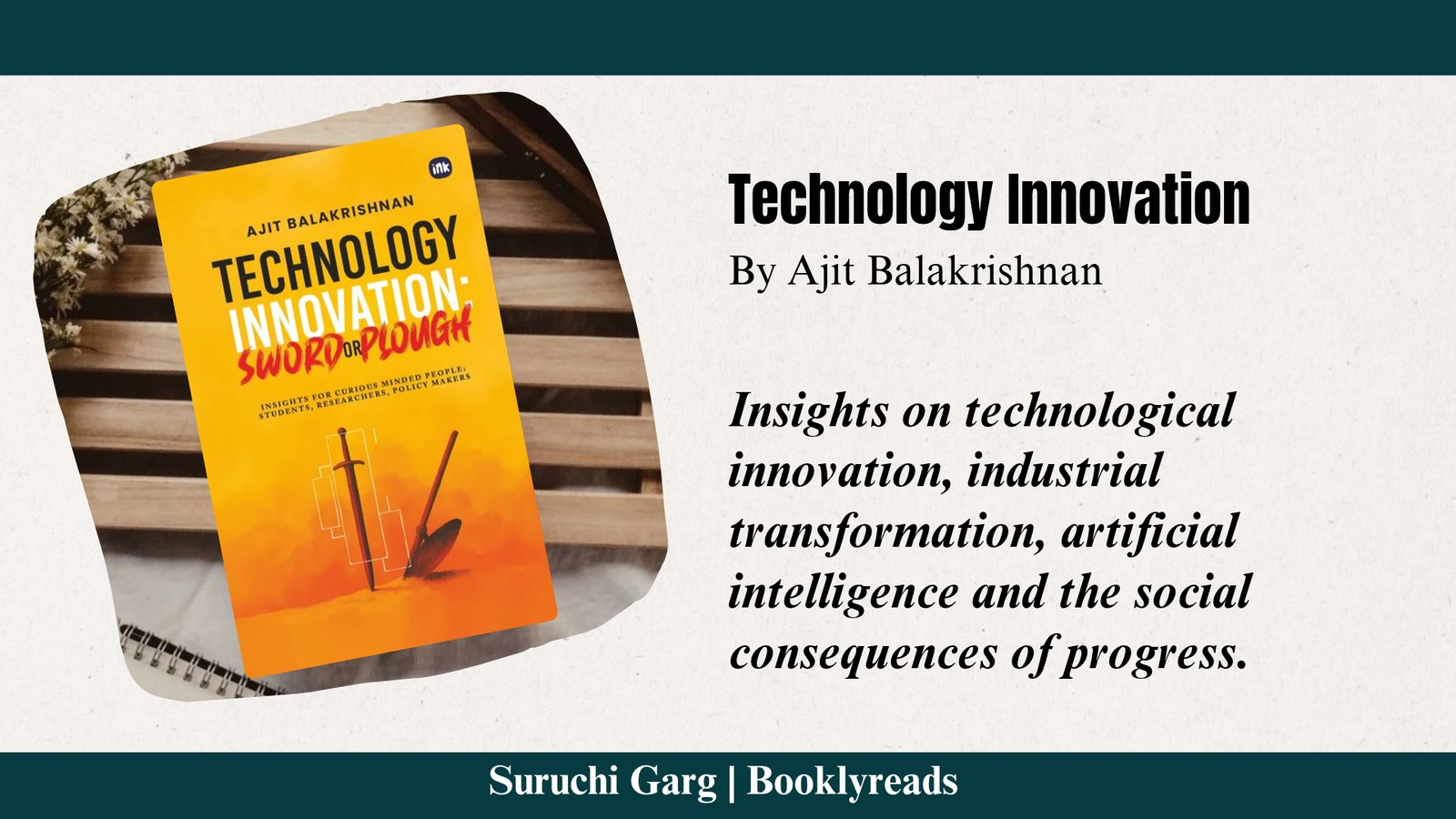
This is the central question explored in Technology Innovation: Sword or Plough by Ajit Balakrishnan. The title presents a compelling metaphor. Technology can become a sword, representing destruction, conflict and concentrated power. Or it can become a plough, representing creation, productivity and progress.
Through the evolution of technology, business models and industries, the book encourages readers to look beyond inventions themselves and examine the larger forces shaping their impact on humanity.
It is a thought-provoking read for anyone who wants to understand not just how technology advances, but what that advancement means for society.
Buy your copy of Technology Innovation: Sword or Plough here
What Is Technology Innovation: Sword or Plough About?
Technology Innovation: Sword or Plough examines the relationship between technological progress and human development.
Rather than treating innovation as an uninterrupted story of success, the book explores its complicated history and consequences. It looks at how technology has influenced industries, transformed business structures, created economic opportunities and changed the nature of work.
The discussion moves across several important developments, including the role of war in technological innovation, Steve Jobs and Apple’s approach to simplicity, Google’s changing business structures, the Y2K bug and the emergence of India’s outsourcing industry. It also examines the movement of India’s skilled professionals across borders and the changing economic landscape created by digital platforms.
These examples reveal an important distinction: inventing something new is only one part of innovation. The larger question is how that invention is implemented, who benefits from it and what consequences follow.
The book ultimately challenges the assumption that every technological advancement automatically translates into human progress.
7 Key Lessons From Technology Innovation: Sword or Plough
1. Innovation Has Two Sides
One of the most important ideas behind the book is that technological innovation is not inherently good or bad.
The same scientific discovery or technological capability can be used for entirely different purposes. It can improve lives, increase productivity and solve difficult problems. It can also strengthen destructive capabilities, concentrate power or create new forms of dependency. The metaphor of the sword and the plough captures this contradiction.
We should evaluate technology not only by what it can accomplish, but also by how it is used and whom it serves.
2. War Has Historically Accelerated Technological Innovation
The relationship between warfare and technological advancement is uncomfortable but important.
Throughout history, military competition and the need for strategic advantages have encouraged investment in research, engineering and new technologies.
However, innovations developed in the context of conflict can eventually influence civilian industries and everyday life.
This raises a larger ethical question: can humanity redirect the outcomes of technological progress towards constructive purposes?
Innovation can emerge from competition and conflict, but its long-term value depends on how society chooses to use it.
3. True Innovation Often Begins With Simplicity
The discussion of Steve Jobs and Apple offers an interesting perspective on creativity and product design.
Technology does not become revolutionary simply because it contains more features or greater complexity. Sometimes, the real breakthrough lies in making something complicated feel intuitive and accessible.
This is an important distinction between invention and meaningful innovation.
The ability to simplify a complicated experience requires understanding the problem deeply enough to remove what is unnecessary.
Innovation is not always about adding more. Sometimes, it is about making things work better with less.
4. Information Can Empower People and Concentrate Power
Google represents a significant shift in how information is organised, accessed and monetised.
Search engines made enormous amounts of information accessible to ordinary users. Yet, the growing role of digital platforms also raised questions about personal data, surveillance, influence and the concentration of technological power.
This is one of the most relevant conversations in the modern digital economy.
The more dependent society becomes on digital platforms, the more important it becomes to understand who controls the information and systems we rely on.
Access to information is empowering, but control over information can become a source of enormous power.
5. Technological Disruption Changes the Nature of Work
The Y2K problem and the growth of India’s outsourcing industry illustrate how a technological challenge can create an entirely new economic opportunity.
The demand for skilled professionals to address the millennium bug contributed to the growth of India’s IT services industry and strengthened its position in the global technology economy.
However, the transformation also raises questions about the nature of employment.
Technology creates new industries, but it can also change how workers are valued, how organisations operate and how much control individuals have over their careers.
When technology changes an industry, the people who learn, adapt and develop new capabilities are better positioned to participate in its transformation.
6. Talent Alone Is Not Enough to Build an Innovation Ecosystem
The discussion around India’s brightest minds and their migration abroad highlights an important economic question: why do talented people leave their home countries to pursue opportunities elsewhere?
Intelligence and education are essential, but they are not sufficient to create an environment where innovation flourishes.
People also need access to funding, supportive institutions, opportunities to experiment and a culture that does not treat failure as permanent defeat.
This is particularly relevant for countries that want to move from providing talent to building globally influential products and businesses.
A country cannot build an innovation economy through education alone. It must also create an environment where ideas can become reality.
7. The Platform Economy Is Changing the Future of Business
Digital platforms have transformed how businesses connect with customers, distribute products and create economic value.
Unlike traditional businesses, platform-based models often bring multiple groups together through a shared digital ecosystem.
This creates enormous opportunities for scale and convenience. However, it also introduces questions about market concentration, ownership, competition, worker rights and accountability.
As platforms become increasingly influential, understanding their business models becomes essential.
The future of business is not just about creating products. It is increasingly about building and controlling the systems through which people interact and exchange value.
Buy your copy of Technology Innovation: Sword or Plough here
What Makes Technology Innovation: Sword or Plough Different?
It Looks Beyond the Excitement Around Technology
Many discussions about innovation focus on breakthroughs, successful entrepreneurs and futuristic possibilities. This book also examines the social and economic consequences of those developments.
It Connects Technology With Business and Society
The examples connect technological change with industrial growth, employment, business structures, global talent and economic opportunity.
It Encourages Critical Thinking
Instead of accepting technological progress as automatically beneficial, readers are encouraged to examine its purpose, impact and distribution of benefits.
It Brings Historical Developments Into Contemporary Conversations
From the influence of warfare to the emergence of digital platforms, the book connects earlier technological transformations with questions that remain relevant today.
Who Should Read Technology Innovation: Sword or Plough?
This book can be particularly valuable for:
Entrepreneurs and business owners: To understand how technological shifts create opportunities and disrupt established business models.
Students of business and technology: To explore the relationship between innovation, economic development and society.
Technology professionals: To think beyond technical capabilities and consider the wider impact of their work.
Aspiring entrepreneurs: To understand why innovation requires more than a good idea.
Readers interested in India’s economic development: To explore India’s role in the global technology industry and the movement of skilled talent.
Curious readers: To develop a more balanced understanding of the technology shaping modern life.
You do not need to be a technology expert to appreciate the larger questions explored in this book.
Final Thoughts:
Technology Innovation: Sword or Plough offers an important reminder: technological progress and human progress are not necessarily the same thing.
A new invention may make something faster, cheaper or more accessible, but that alone does not guarantee that it will make society better.
The real measure of innovation lies in its consequences.
Does it create opportunities? Does it improve the quality of life? Does it distribute benefits fairly? Does it empower people, or make them increasingly dependent on systems they cannot control?
These are questions worth asking as artificial intelligence, automation, digital platforms and emerging technologies continue to reshape our world.
The most valuable takeaway from this book is perhaps the need to become more thoughtful about the direction of progress. Technology gives humanity powerful tools. What we choose to build with them is ultimately our responsibility.
A book worth exploring if you want to understand the relationship between technological innovation, business transformation and the future of society.
Buy your copy of Technology Innovation: Sword or Plough here
Frequently Asked Questions (FAQ)
What is Technology Innovation: Sword or Plough about?
Technology Innovation: Sword or Plough by Ajit Balakrishnan explores the history, impact and consequences of technological innovation. It examines how technology transforms industries, businesses, employment and society while highlighting its constructive and destructive possibilities.
What does the title Sword or Plough mean?
The title represents two possible directions of technological innovation. A sword symbolises destructive applications and concentrated power, while a plough represents creation, productivity and constructive human development.
Is Technology Innovation: Sword or Plough suitable for beginners?
Yes. Readers interested in technology, business and society can explore its larger ideas without necessarily having a technical background. Its historical and business-oriented examples help connect technological developments with everyday economic and social questions.
Who should read Technology Innovation: Sword or Plough?
The book is relevant to entrepreneurs, business students, technology professionals, researchers and readers interested in innovation, India’s technology industry and the future of the digital economy.
Why is technological innovation important for society?
Technological innovation can improve productivity, create industries, solve problems and expand opportunities. However, its impact depends on how technologies are developed, distributed and used.
You might also like
- All Posts
- Book Recommendations
- Non-Fiction Books
- Author Interviews
Recent Posts

Suruchi Garg
Suruchi is a reader and book influencer passionate about helping readers find books that truly impact their lives. She was listed as Top book influencer among top 60 Indian book influencers in 2025. With the experience of over 4 years and was trusted by more than 300 authors she aims to make reading a transformative experience.
Latest Blog

Featured


Sign Up for The Newsletter for Updates on Writing, Tour, and More

Book influencer and self help enthusiast.
Book influencer and self help enthusiast.
Contact Info
readsbookly@gmail.com
@booklyreads
Navigation
- Home
- About
- Book
- Contact